
What summer did to the soil
Houston sits on deep expansive clay that shrinks as it dries. Through the long, hot weeks of summer, that clay contracted and pulled away from the underside of concrete slabs, leaving voids where there used to be support. Gravity does the rest: unsupported sections settle into the gap, slowly, a fraction of an inch at a time. This is why new unevenness tends to appear at the end of a dry summer rather than in the middle of it.
Why the fall rains expose it
When the fall rains arrive, the clay swells back up — but not evenly. Soil that shrank in July does not rehydrate uniformly in October. Some areas swell back against the slab, some stay shrunken, and water starts pooling in the low spots the settling created. That uneven support is what turns a slightly sunken slab into a rocking one. Fall is also when homeowners are outside again and notice the water that now ponds by the garage.
What to look for right now
Walk your concrete this week and check for: uneven joints between driveway or sidewalk sections; water pooling where it used to drain away; new trip hazards at expansion joints; slabs that rock when you step on a corner; and cracks that keep widening through the fall.
Why acting in fall matters
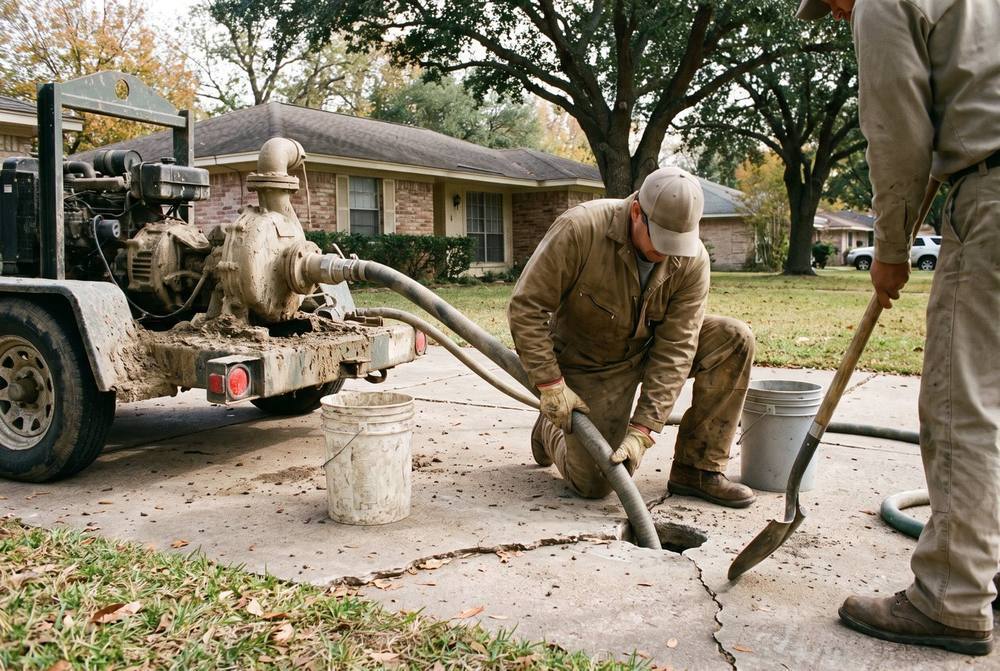
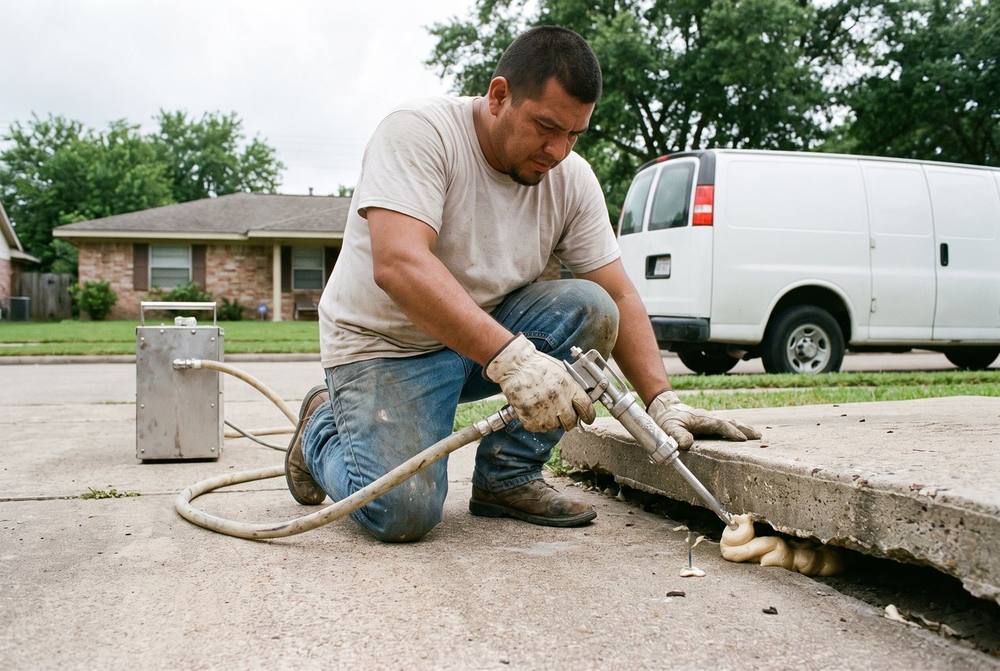
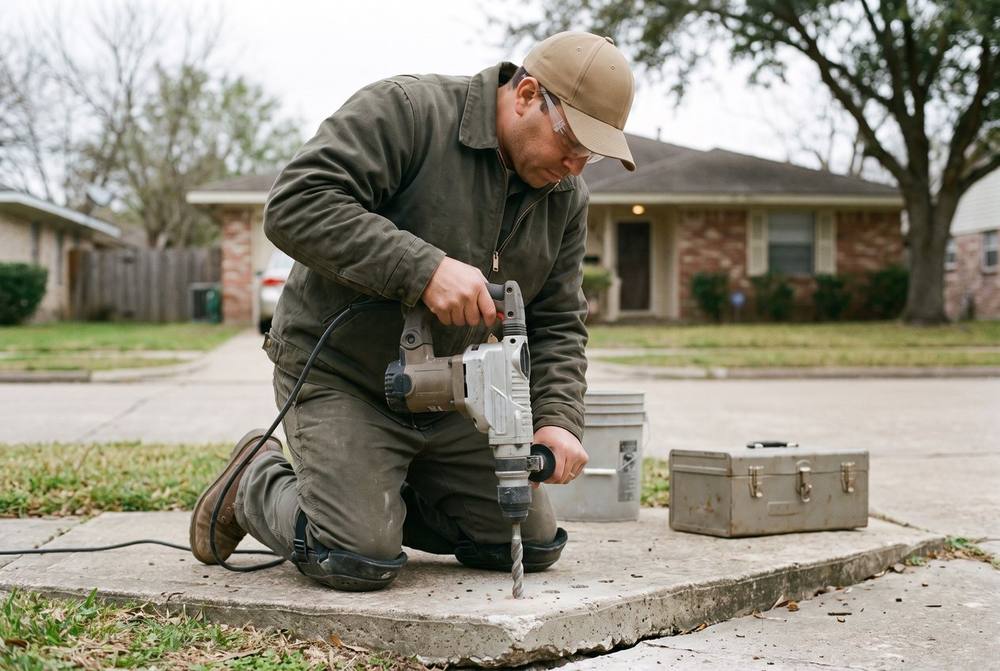
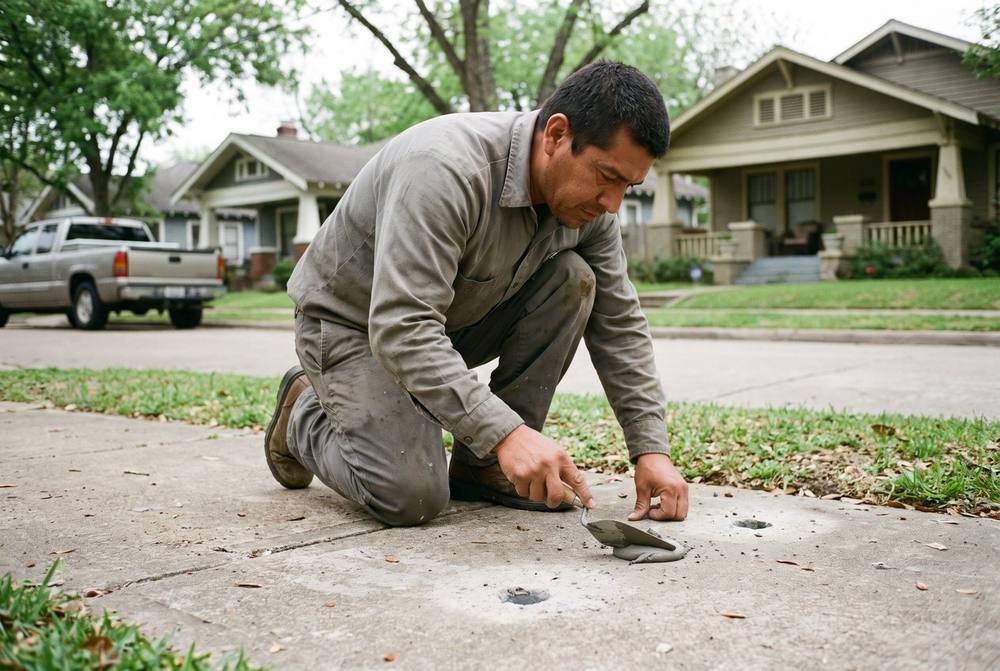
Catching settlement early is a cost question. Concrete leveling is generally an option while the slab itself is still intact — foam or grout is injected underneath to fill the voids the summer left behind and raise the slab back to grade, typically at a fraction of replacement cost. Wait, and every rain cycle pumps water into the voids, eroding more soil. What was a leveling job in October can become a replacement job by spring. If doors are sticking and walls are cracking, that is a foundation problem instead — our foundation repair vs. concrete leveling guide explains how to tell the difference.
The takeaway
The drought-then-deluge cycle is the engine of concrete settlement in Houston, and the fall transition is when it becomes visible. If your concrete moved this season, now is the cheapest time to fix it. See also why concrete sinks in Houston.
Noticed new unevenness this fall?
Request a free concrete leveling quote and describe what you are seeing.
Concrete Leveling Quote
GET A FREE QUOTEHouston concrete guide
Fall Rains & Sinking Concrete FAQ
Why does my concrete sink more in the fall?
It does not sink more in the fall — it shows more. Summer drought shrinks the clay under the slab and the concrete settles gradually; fall rains then swell the soil back unevenly, and homeowners notice trip hazards, pooling, and rocking slabs for the first time.
Will the slab go back to normal once the soil rehydrates?
Rarely. Once a slab has settled into a void, swelling soil does not lift thousands of pounds of concrete back to grade. Leveling fills the voids and raises the slab mechanically.
Is fall a good time to get concrete leveled in Houston?
Yes. The settlement is fully visible, so the full scope is known, and fixing it before winter storms erode more soil underneath keeps a leveling job from becoming a replacement job.
How much does concrete leveling cost compared to replacement?
Leveling is typically a fraction of the cost of tearing out and repouring. Fall estimates are free, so there is no reason to guess.
Can drought cause my driveway to sink?
Yes. During extended dry periods, Houston clay shrinks and pulls away from the bottom of the slab. The concrete then settles into the gap. This is why new unevenness often appears at the end of a dry summer.
Do tree roots make concrete sink?
They can contribute. Large trees draw moisture from the surrounding soil, which speeds up the shrinking of clay near the slab, and roots can displace soil or press against slab edges. It is one factor worth noting, though soil and water are usually the bigger drivers.
How do I know if my concrete is sinking or just cracked?
Sinking shows up as elevation change: one section sits lower than its neighbor, water pools in new spots, or a slab rocks underfoot. A crack with no height difference is often just shrinkage or stress. If joints are uneven or trip hazards are forming, the slab is moving.