
The materials are completely different
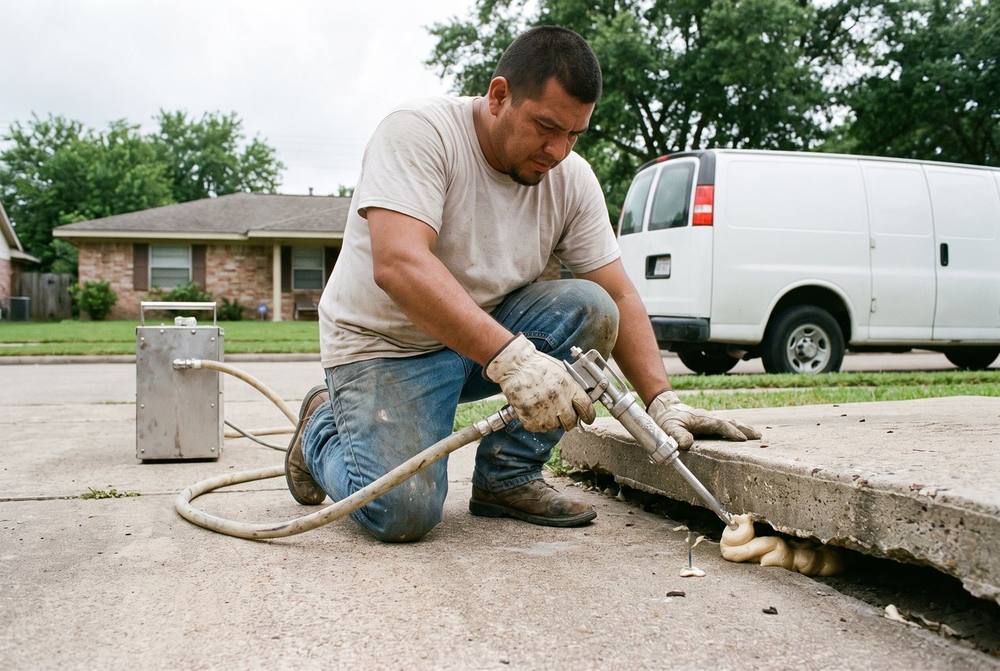
Polyjacking uses a two-part polyurethane liquid that is injected beneath the slab and expands into a rigid, closed-cell foam. The foam is far lighter than soil or concrete, bonds to the slab and the ground, and is water-resistant once cured.
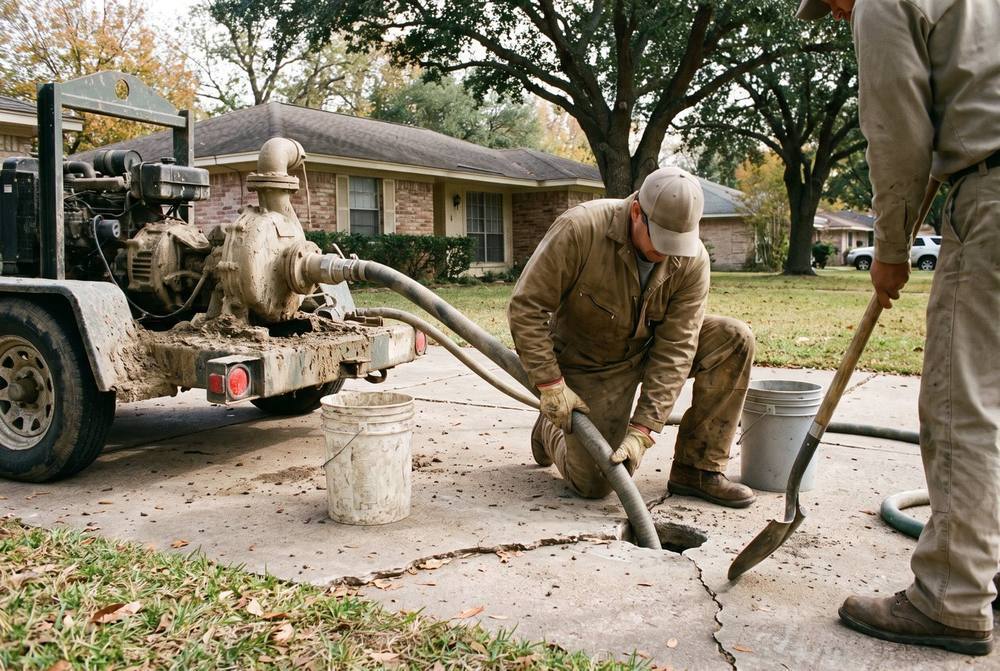
Mudjacking uses a slurry — sometimes literally called “mud” — made from cement, sand or soil, and water. It is pumped as a heavy fluid and hardens much like concrete. Both materials fill voids and raise the slab; they just get there in very different ways.
How the cost usually compares
Polyurethane material costs more than cement slurry, so polyjacking bids often come in higher than mudjacking for comparable projects. On small jobs the gap may be modest; on large areas with big voids, the material difference adds up.
Total price still depends more on the project than the method: slab size and count, amount of settlement, void volume, access, and injection points. See our Houston concrete leveling cost guide for the full breakdown, or request a free quote to compare real numbers for your slab.
Weight matters on Houston clay
Much of Greater Houston sits on soft, expansive clay. Pumping a heavy cement slurry onto weak soil adds load exactly where support is already failing — worth discussing with a provider before choosing mudjacking on very soft ground.
Polyurethane foam adds very little weight, which is one reason it is often recommended where soils are soft or saturated. Lighter does not automatically mean better, but on Houston clay it is a genuine advantage.
Hole size and how the slab looks after
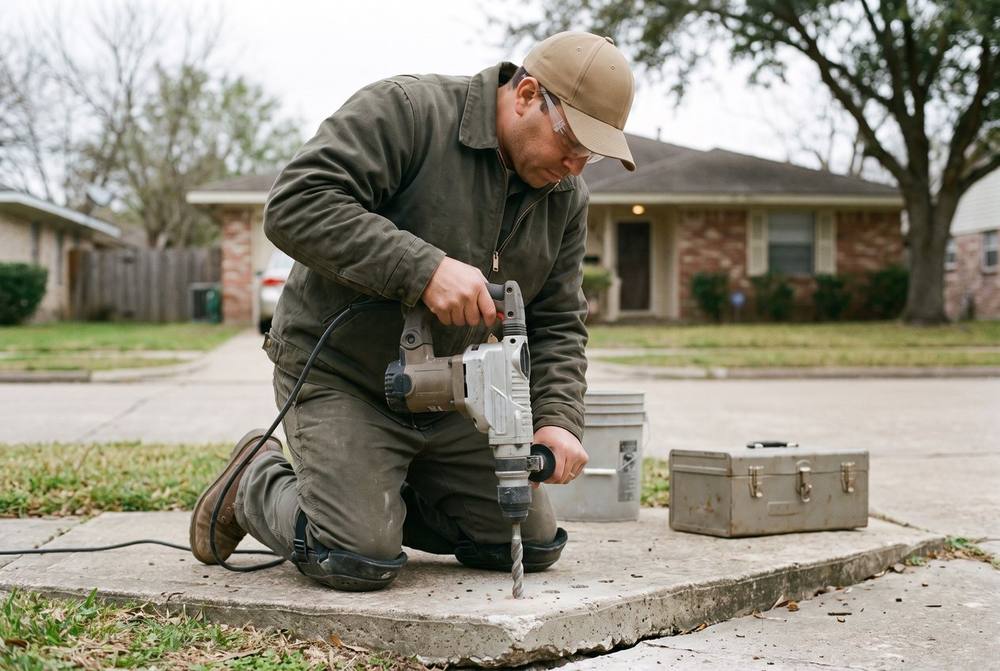
Polyjacking injection holes are small — closer to a pen or marker in diameter — so patching is subtle, which matters on decorative patios, pool decks, and front driveways.
Mudjacking holes are larger, since thick slurry needs a bigger port. They are patched with cement after the lift and blend in from a normal viewing distance, but the patch pattern is more noticeable up close.
Cure time and getting back to normal
Polyurethane foam cures within minutes to hours, so driveways and walkways can usually be used again the same day. That fast turnaround is a major reason commercial properties choose it.
Cement slurry needs real cure time before the slab takes heavy loads — a provider will tell you how long to keep vehicles off a mudjacked driveway. Light foot traffic is typically fine sooner.
How long the lift lasts
Neither method fixes the cause of settlement, so longevity comes down to soil stability, drainage, and slab condition. Cured polyurethane is stable and will not wash out; hardened slurry is durable cementitious material. Both can last for years when the ground beneath them stays put — and both can fail early if erosion or drainage keeps removing support. Fix the water, and either lift stands a far better chance.
It is also worth asking what happens if settlement continues. A provider should explain whether the method allows for future adjustment, what the warranty covers, and what conditions would void it. Vague promises here are a red flag regardless of which material is proposed.
Which method fits which project
Mudjacking tends to fit larger voids, bigger areas, and budget-driven projects where the lower material cost matters and the soil can take the weight. It has lifted concrete successfully for decades and remains a legitimate choice.
Polyjacking tends to fit finished surfaces where small holes matter, soft or saturated Houston soils, projects that need fast turnaround, and lifts requiring precise control — pool decks, patios, and commercial floors especially.
How to choose for your slab
Get an evaluation rather than choosing on the name alone. Ask the provider which method they recommend and why, how large the injection holes will be, what the material weighs, how soon the slab can be used, what happens to drainage, and what warranty applies. Then request a free concrete leveling quote and compare. You can also read the method pages: polyjacking, mudjacking, and foam concrete leveling.
Read about polyjacking and mudjacking, or request a free quote.
Concrete Leveling Quote
Compare methods with project-specific pricing.