Trip points and uneven joints
Tree roots, soil movement, drainage, and loss of support can all contribute to uneven walkway panels. The provider should identify whether the slab is simply low or whether another condition is actively pushing or undermining it.
Residential walkway leveling
Front walks and side-yard paths are common candidates for concrete lifting. The repair needs to respect steps, porches, driveways, gates, and drainage slopes.
Commercial and HOA sidewalks
Properties with frequent foot traffic may have more urgency around uneven sidewalk joints. Commercial and multifamily projects can be evaluated section by section so the highest-priority areas are clear.
Leveling versus grinding
Grinding can reduce a small raised edge but does not raise a low slab or fill a void. When the low panel is the problem, lifting addresses a different condition.
Trip-hazard exposure and HOA pressure
An uneven sidewalk joint is more than an eyesore. A raised edge of even half an inch can catch a shoe, and walkways are exactly where visitors, delivery drivers, and neighbors walk every day. When someone trips on a panel in front of your home, the homeowner is the one who may be held responsible. On commercial and multifamily properties the exposure is larger, because foot traffic is constant and a fall can become a claim.
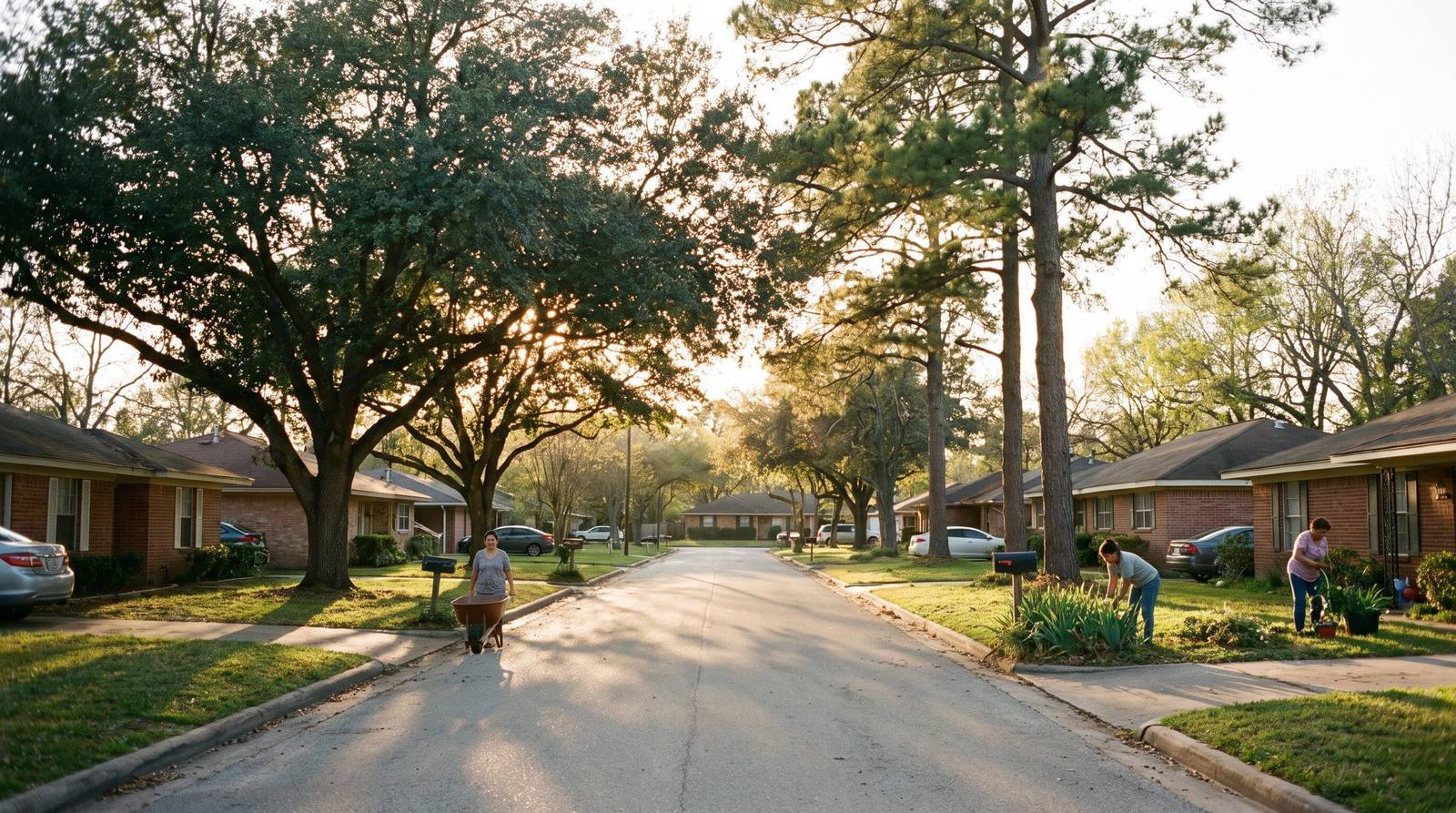
Houston-area homeowners associations are another reason sidewalks get fixed quickly. Many HOAs send violation notices for uneven or broken walkways, usually with a deadline attached. Leveling is often the fastest way to answer that notice: a provider can raise the low panels, eliminate the height difference, and leave you with a walkway that looks maintained without the cost and disruption of a full replacement.
Why Houston sidewalks sink
Houston sits on expansive clay soil that swells when wet and shrinks during dry spells. A sidewalk panel is thin and light compared to a foundation, so it rides every soil cycle. After a long dry summer the ground pulls away from the underside of the slab; then a heavy Gulf rain saturates the soil and it heaves back. Repeat that cycle for a few years and joints that once sat flush start to step up or down.
Tree roots are the other classic Houston cause. Mature live oaks and other large trees send roots under walkways, and a root an inch thick can lift a panel or crack it at the joint. Poor compaction during original construction, water from a downspout that discharges too close to the walk, and leaks from irrigation lines all wash fine material out from under the slab and leave voids. A provider should check for these active causes during the visit, because lifting a panel that is still being pushed up by a root will not hold.
Polyjacking, mudjacking, or replacement for a walkway
Three approaches can fix an uneven sidewalk, and they suit different situations. Polyjacking injects expanding polyurethane foam through small holes, usually about the size of a dime. The foam fills voids and raises the slab, and the material is lightweight, so it does not add load to the soft soil beneath. Most walkways are walkable the same day.
Mudjacking pumps a cement-based slurry under the slab through larger holes. It is a long-established method that can handle heavier slabs, but the slurry is heavier than foam and the holes it leaves are bigger and more visible. Full replacement means tearing out the old panels, hauling them away, re-grading the base, and pouring new concrete. It gives a brand-new surface but takes longer, costs more, and the new concrete still sits on the same Houston clay that moved the old walk.
When the panels are intact and the main problem is loss of support, lifting is usually the more practical choice: less demolition and a repair finished in hours rather than days. Replacement makes more sense when panels are shattered, badly spalled, or too thin to lift cleanly.
What the process looks like
A typical sidewalk leveling visit starts with the provider walking the affected panels and the surrounding area. They look at how far the slab has moved, whether roots or drainage are involved, and how the walkway meets steps, porches, driveways, and gates, because all of those fixed elevations limit how far a panel can safely be raised.
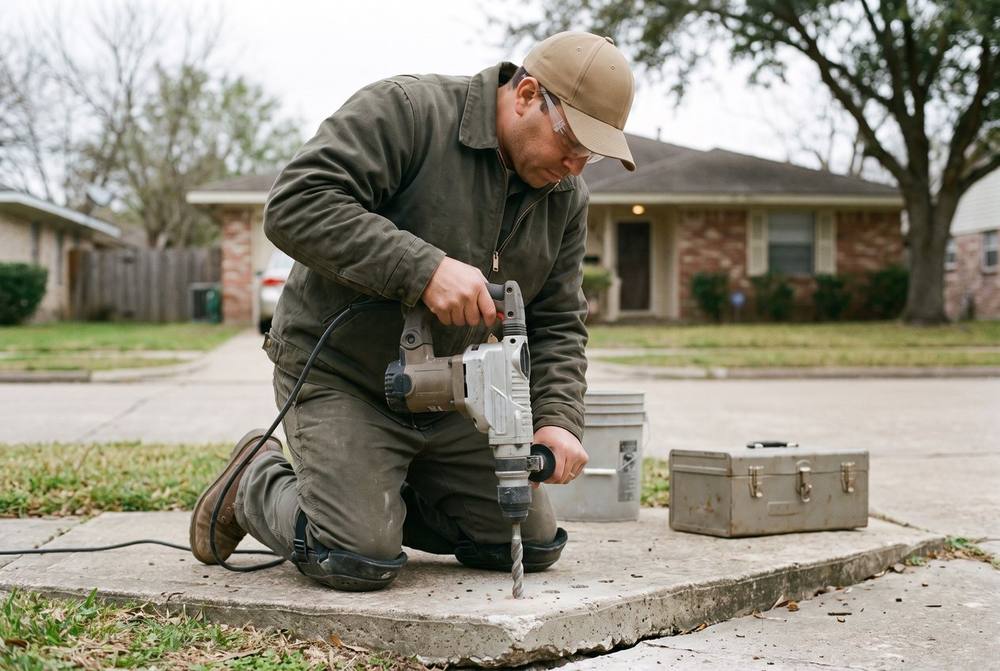
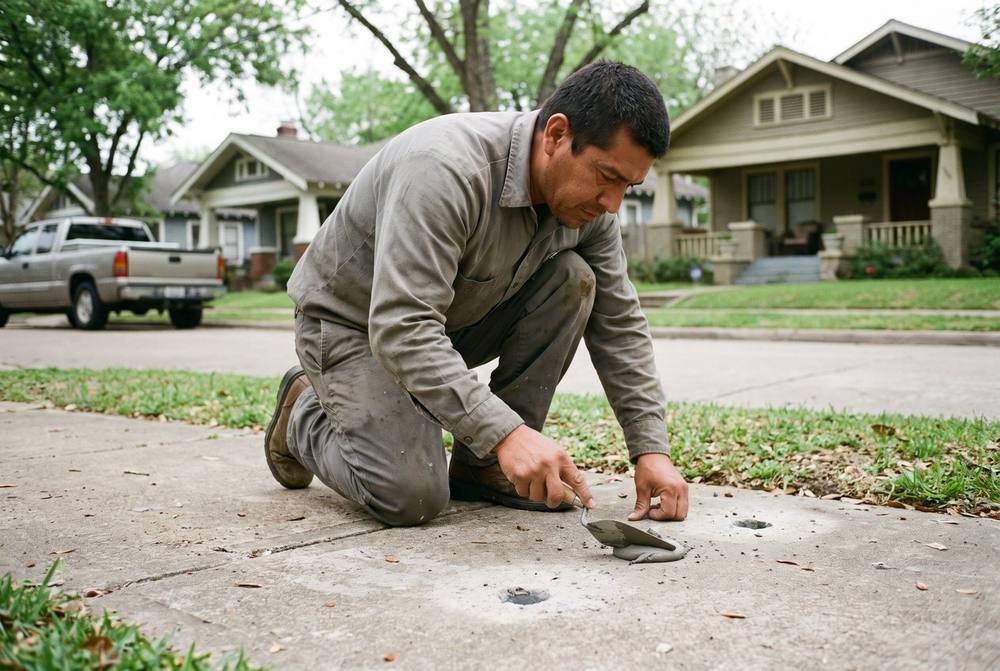
Small holes are drilled through the low panels, and the lifting material is injected in stages while the provider watches the slab rise. The goal is to bring the joint back to flush, not to overshoot. Holes are patched, and the walk is checked for a smooth transition before the crew leaves. Most residential sidewalk jobs are completed in a few hours.
How long a leveled sidewalk lasts
A leveled sidewalk can stay in place for years, but Houston soil will keep cycling through wet and dry seasons, so longevity depends on the cause. If a downspout is redirected, a leaking irrigation line is repaired, or an aggressive root is cut back, the repair has a stable base to sit on. If the cause is still active, settlement can return. It is worth asking what warranty the provider offers on re-settlement and what conditions it covers. Our guide on how long concrete leveling lasts goes into more detail.
When grinding or replacement is the better call
Grinding shaves down a raised edge and can be reasonable for a small lip, but it does not raise a sunken panel or fill the void under it. When the low side is the problem, lifting addresses the actual condition. Replacement is the honest answer when panels are crumbled, extensively cracked, or the walkway needs re-grading so water drains away from the house. A good provider will tell you which category your walkway falls into rather than pushing one method for every job.
Get a Houston-area quote
Call or send your ZIP code and a short description of the settled concrete. A provider can discuss the slab, surrounding surfaces and next steps during follow-up.
Explore concrete leveling and lifting in Houston, or request a free quote.
Free Quote Request
Tell us what settled. We’ll help you take the next step.
Related:
Concrete leveling cost
Polyjacking vs. mudjacking
Concrete leveling FAQ
Service areas:
Houston · Katy · Sugar Land · More areas